The Land Institute
The Land Institute is a 501-c non-profit organization that leads the global movement for research on perennial grains, edible legume plants, oil seed-bearing plants, and regenerative agriculture. One of the most exciting developments at The Land Institute is Kernza® perennial grains. This grain is a type of intermediate wheatgrass that has deep roots extending up to 10 feet beneath the soil and is rooted all year long. Compared to conventional wheat Kernza® yields 1/3, so the organization’s goal is to increase the yield to match wheat annually.
Kernza® is an ecological plant that can benefit farmers and can grow at scale. Kernza®’s stem and plant leaves can even be used to feed cattle after harvest, making it a versatile crop.
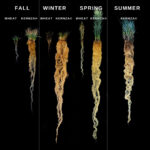


Perennial grains like Kernza® are an excellent choice for farmers. They do not need replanting every year, and they save farmers from having to plow or use herbicides to suppress or kill vegetation. This saves farmers labor, money, and time, creating a more sustainable system. Perennial grains are also robust crops that protect the soil from erosion and improve the structure of the soil. It reduces the need for climate change adaptation and mitigation efforts, making it an excellent choice for farmers looking to reduce their environmental footprint.
The Land Institute is committed to conducting ecological intensification research, which involves growing multiple crop plants in one area that mimics the benefits of natural ecosystems. This process keeps pests in check, maintains fertility, and prevents the loss of soil, nutrients, and organic matter. By developing Kernza® and promoting regenerative agriculture, The Land Institute is making a significant contribution to sustainable agriculture and the environment.
Learn more about The Land Institute here.
“Perennial Grain Crop Development.” The Land Institute, landinstitute.org/our-work/perennial-crops/.