Art:K12 is an exhibition program at Weaver Street Market’s Carrboro store, focusing on artwork created by local children and youth. The program began in February 2015. Its initial intention is to offer a public space for viewing visual art created by students in the CHCCS district, as well as local private schools.
This month’s exhibit is from the 6th, 7th, and 8th graders at McDougle Middle School. It features cells and ocean zones. It will be on display until May 22.
Cell Models: 7th Grade, Teachers: Ms. Karen Kaczman, Mr. Ruben Giral
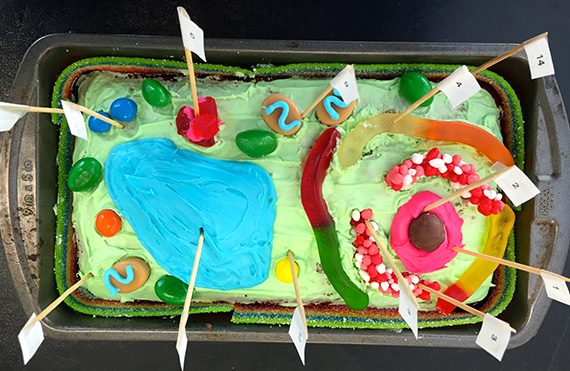
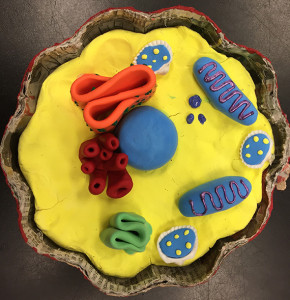
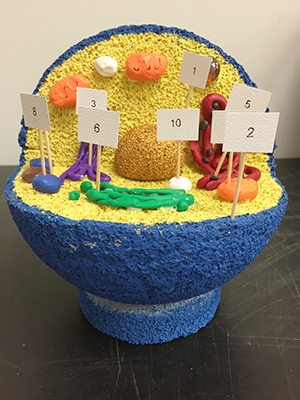
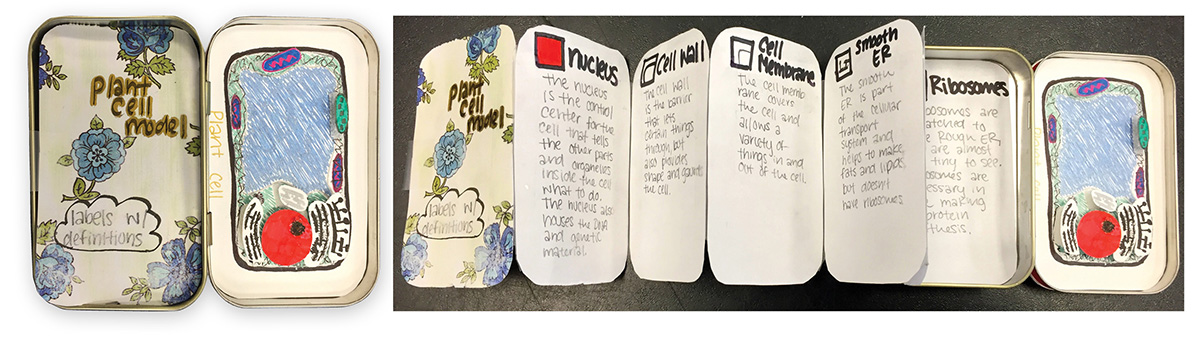
As a culminating project for their unit on cells, 7th grade students were challenged to create a cell model using the materials of their choice. While some students meticulously crafted models from styrofoam balls and clay, other students showcased their cooking skills by baking cakes, giant cookies or pizzas “decorated” with organelles. Other students showed off their sewing skills by making cell pillows, while others demonstrated great resourcefulness by utilizing materials salvaged from the trash. Student models were accompanied by a key that detailed the cell organelle functions.
From Microscope to Telescope: 6th Grade, Teacher: Ms. Anna Glasgow
Students captured images of our natural world, as seen through a microscope and a telescope.
Estuary Zone Murals: 8th Grade, Teachers: Ms. Leigh Aultman, Ms. Christine Lippy

Students explored the diversity of the vast ocean through the lens of several different ocean zones. As the depth in the ocean changes, so do the biological and chemical characteristics, which define each zone. Students researched the uniqueness of their zone, then constructed organisms and other habitat features to illustrate how their zone was different from other ocean zones.
Once each zone was complete, students incorporated processes that connect one ocean zone to another. For instance, many organisms that live in the surface zone of the ocean swim into estuaries to breed because estuaries provide a safe haven for juvenile organisms, due to the density of vegetation along the river and high nutrient levels. These types of connections can be found within each zone. To accompany the visual display, students summarized the living conditions, resources, ecological challenges, and the importance of each zone.