By Carolyn Twesten, Weaver Street Market Produce Merchandiser
This is Part 2 of a two-part story. Read Part 1 here.
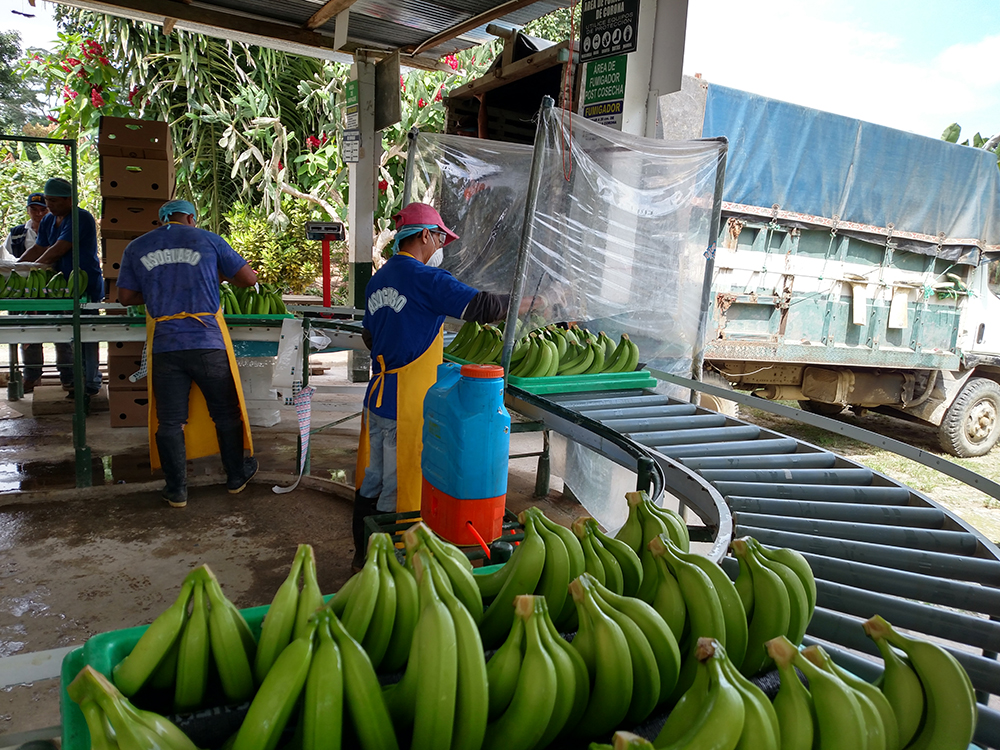
This June, I traveled to Ecuador with Equal Exchange’s 2018 Ecuadorian Banana Delegation. We visited the cooperative of small-scale banana producers that Equal Exchange purchases from.
The Ecuadorian banana grower cooperative that we visited is called AsoGuabo, in the small town of El Guabo, located in the El Oro region of southwestern Ecuador. Made up of 125 small-scale banana farmers, AsoGuabo sends 30 shipping containers of bananas per week to locations all over the globe. It was an amazing feeling standing in the middle of their warehouse, in the center of such an enormously international business. And even more amazing was knowing that this was the work of small growers collaborating with each other. As I mentioned in Part 1 of this blog series, some of the banana farms are as small as two or three acres. A farm this size may only be producing twenty boxes per week, while a single shipping container holds 1000 boxes! It is for this reason that the growers organize as a cooperative to combine their yields into a quantity they can export economically.
On the farm
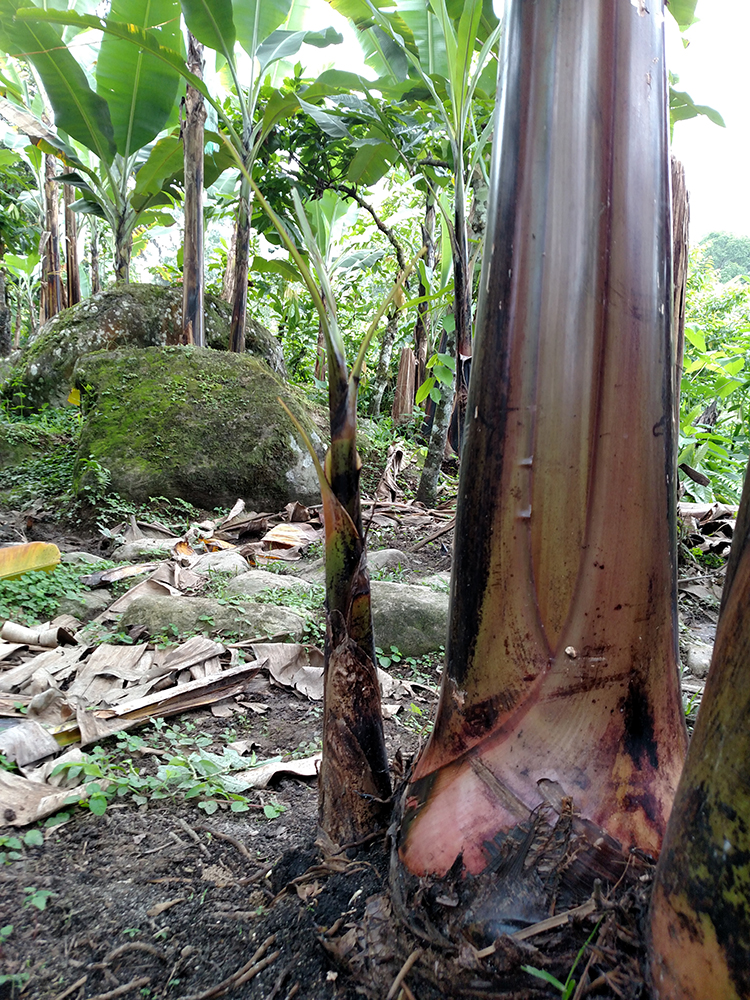
The farm we visited first on our trip was Finca La Perezosa in La Liberdad, owned by Señor Hugo Rocafuerte. This is where my banana education began. We learned that a banana tree only produces one “racimo” (large bunch, approx. 40 lbs) of bananas in its lifetime, which takes about seven months. The main tree—the “madre”—produces offshoots that will bear fruit after the madre is cut down. When the fruit is very young on the tree, plastic bags are placed around the racimo to protect it from insect damage. The fruit is ready to harvest about twelve weeks after the bag is put on, at which point the workers will cut the top of the tree off to access the bunch. The worker catches the bunch on a thick cushion on his shoulder to protect the fruit.
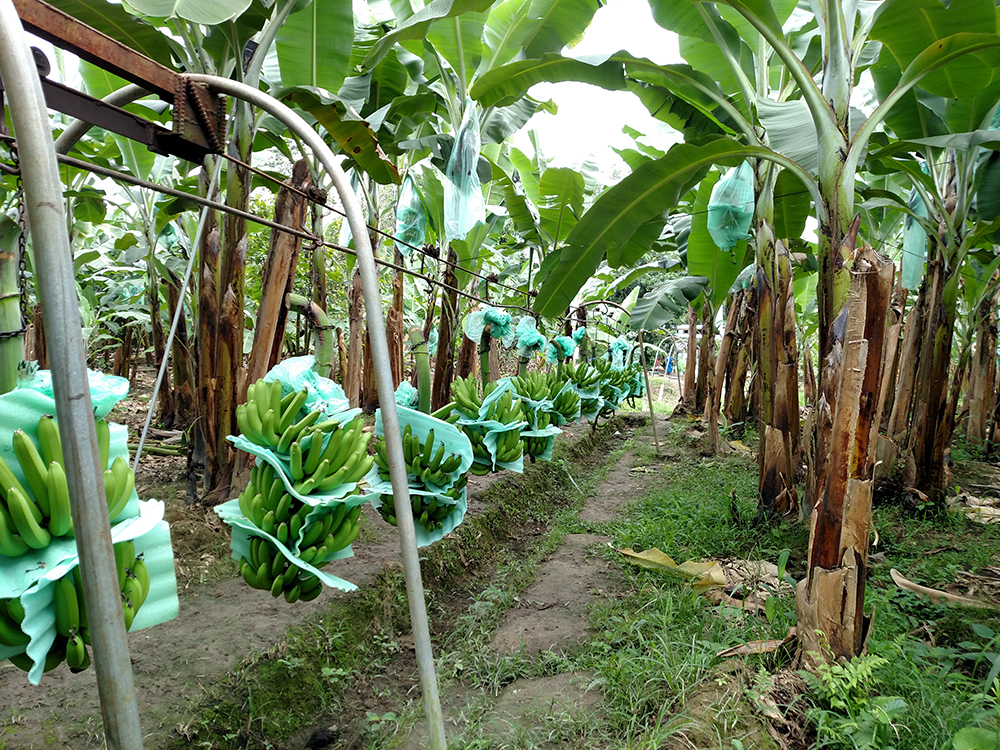
On many farms, the racimos are carried by the workers all the way to the wash area. An infrastructure improvement that AsoGuabo has made for many of its growers was to install cable lines that the racimos are hooked to, to make transport to the wash area much easier on the workers.

Once the bananas reach the wash area, they are inspected for quality several times before they are packed into boxes. An employee from a third-party inspection service measures the width and length of a random selection of bananas to make sure they meet the grade standards. The bananas that make the grade are then cut off the racimo in smaller bunches, or “hands,” and tossed into the wash tank. The water allows the fragile fruit to float unharmed while workers inspect the bananas again for insect damage or deformities. Any fruit that doesn’t meet the standards is put aside for shipping to the banana puree processor, so it does not go to waste.

The morning that we visited Finca La Perezosa they were packing 140 boxes of bananas for Equal Exchange. Sr. Rocafuerte toured us around the farm, explaining his processes. It was obvious that this was a family business, with his wife, sons, and nephews working alongside him. I found out that this family participation is very common among the small banana farms. We also saw many improvements to working conditions as a result of the fair trade premium (the extra $1 per box earned for fair trade bananas). Restrooms with running water, staff dining areas, and safety equipment were all present on the farm.
Banana transport

Later in the week we had the opportunity to tour the banana packing warehouse, where the shipping containers are filled, as well as the Port of Guayaquil, where the containers are loaded onto the ship for the long trip to their final destination. We learned that it takes three weeks for the bananas to arrive at the Port of Philadelphia, before they are transported to the Four Seasons Produce warehouse and then shipped to our stores.
While at Four Seasons the bananas are put into huge temperature-controlled rooms where they are exposed to ethylene gas, a naturally-occurring plant hormone that initiates the ripening process. (This is the same gas that ripens peaches when you enclose them in a brown paper bag.) All told, the bananas’ journey lasts about a month from the time they leave the tree to their arrival at Weaver Street Market and our customers’ kitchens!
About fair trade
Another feature of the delegation was the opportunity to see the amazing results of the projects paid for with fair trade premiums. As I mentioned in Part 1 of this series, fair trade criteria requires that the growers get paid a higher price per box of bananas (in Ecuador, $9 vs $6 or less for conventionally grown bananas) and the cost of a box of bananas to the exporter includes a $1 fair trade premium. This money goes into an account at AsoGuabo, where board members will vote on what projects to fund that year. The projects that we visited were a health clinic for children with developmental disabilities and a community center that hosts a daycare and a cooking school. Many other community needs are funded by this money, such as schools, regular health care for the banana workers, and the installation of water purification systems.
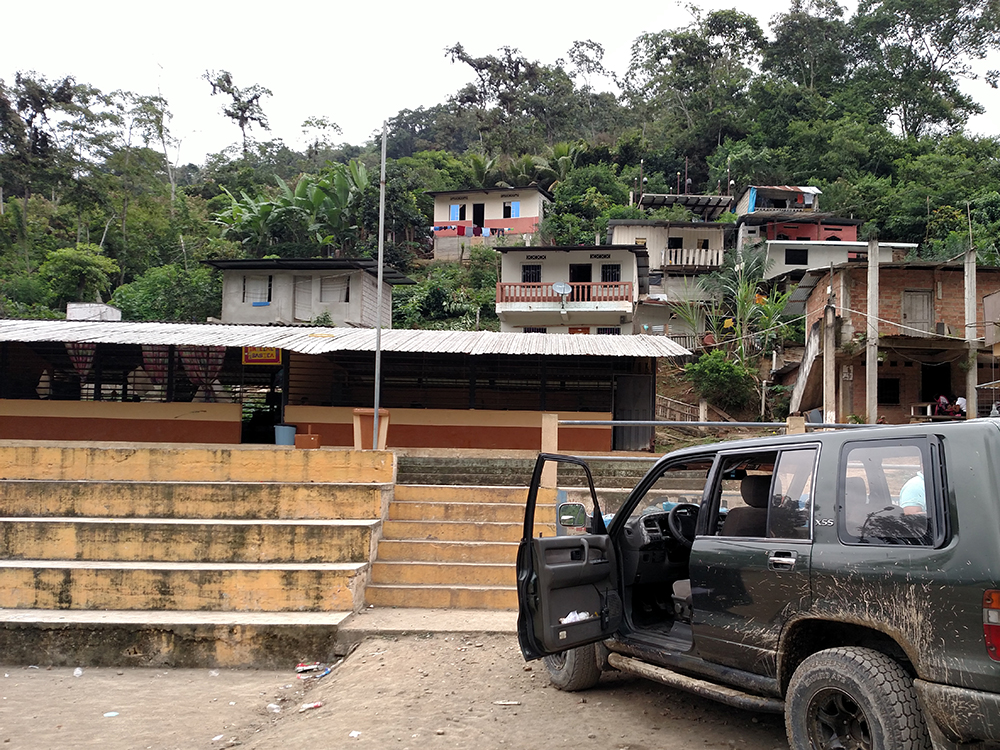
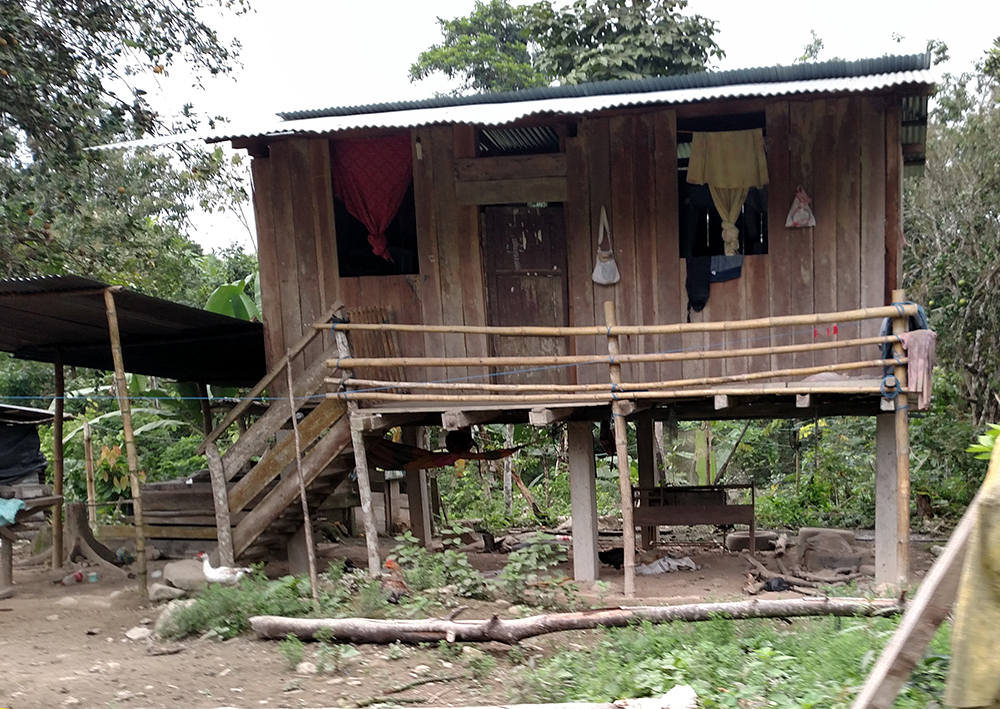
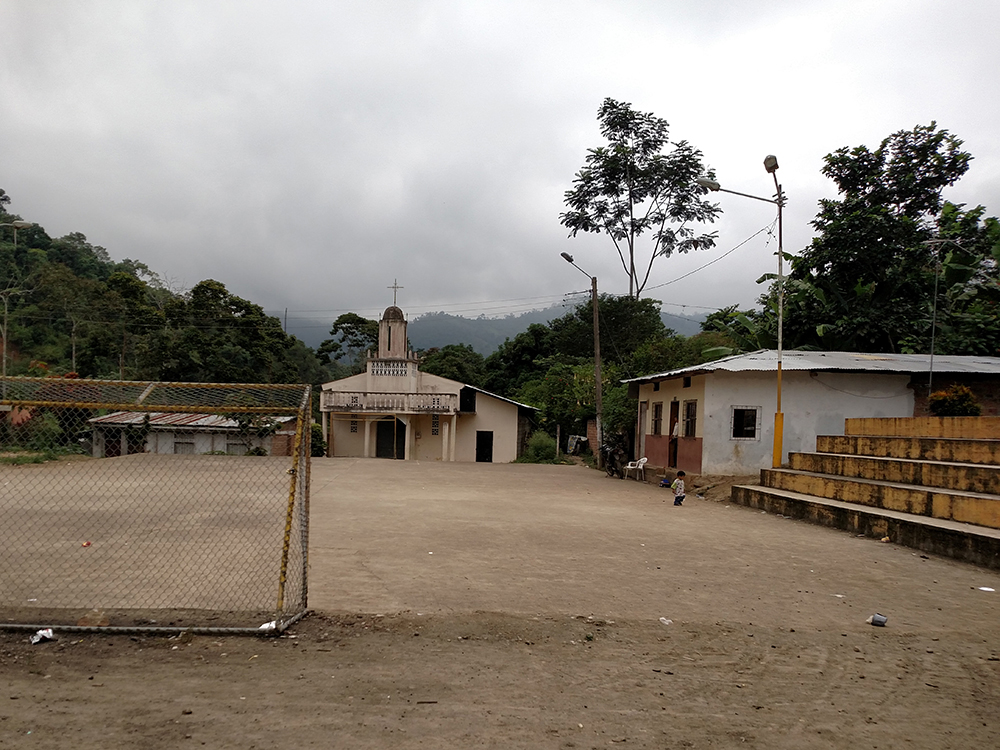 Driving through the small rural communities of the El Oro region, I could see what an essential role AsoGuabo plays: from empowering and supporting small farmers, to creating jobs at all levels of the Ecuadorian banana supply chain, to improving the quality of life in the region through improvement projects. In an area where basic needs are often not met, change like this is extremely impactful. Over one million dollars went back into the community in 2017! I estimated that approximately $5,500 of that came directly from the banana purchases of Weaver Street Market’s customers!

There is a lot of confusion in the market these days surrounding fair trade. Many different labels with unknown standards and enforcement make it hard to know what you are buying. Ironically, some of the corporations whose unethical business practices were the impetus of fair trade are now selling fair trade bananas themselves. One thing to look for in the market is a third party certification, like that of Fair Trade USA or Fair Trade America. These labels have some of the highest standards. Or check out this article that explains labels more in depth: https://fairtradewinds.net/guide-fair-trade-labels/
 I must admit that I took bananas for granted before I made this trip. Like so many products on our grocery store shelves, they are faceless. They come out of a cardboard box, not from a farm, not a product of the hard work of many human beings. Learning about banana production and meeting some of the farmers who produce OUR bananas changed my feelings entirely. It created a valuable connection for me, one that I hope I have shared with all of you who have read this. Inevitably, there will always be products on our shelves that come from big corporate businesses. But the products that we are really proud of are the ones that come from co-ops like AsoGuabo, part of our global local community. Supporting companies like them is something that we can all be proud of!