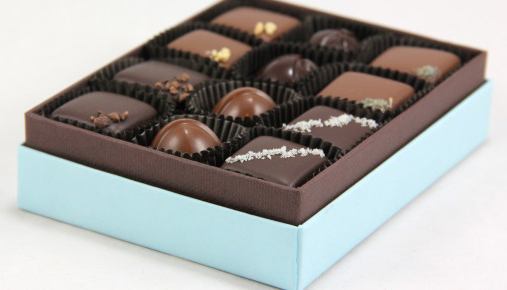
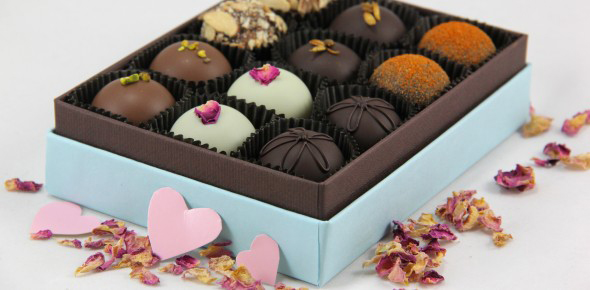
 This Valentine’s Day, we have caramels and truffles from French Broad Chocolates in Asheville. Jael and Daniel Rattigan began the company in 2007 and have been making beautiful chocolates ever since, selecting ingredients with integrity and supporting small and local businesses, fair trade, and organic and sustainable products.
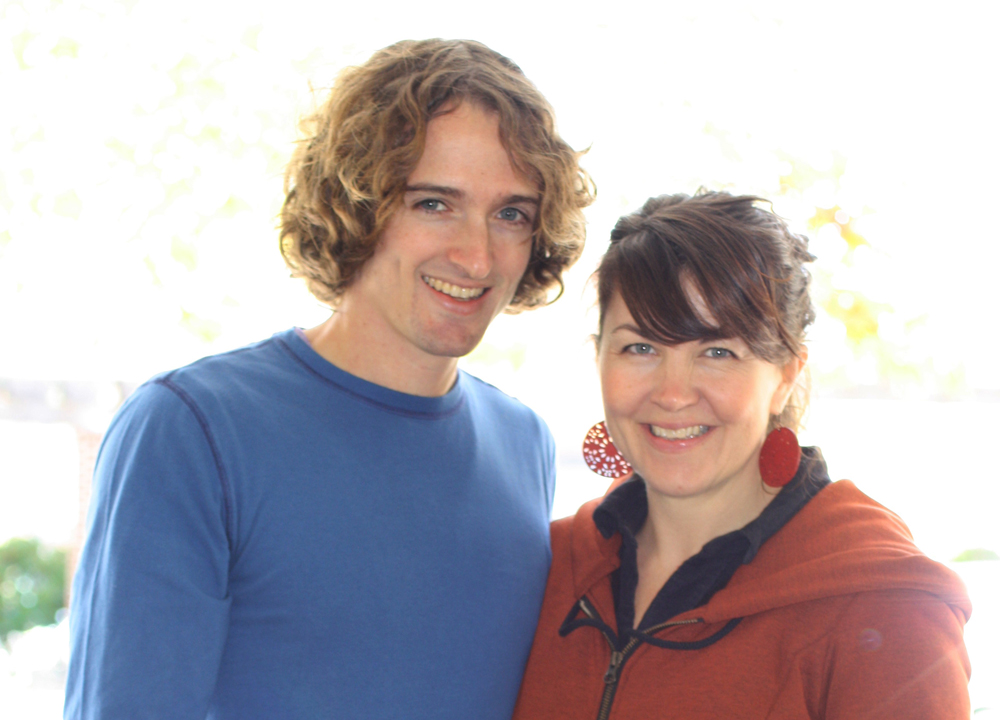 The Rattigans chocolate-making adventures began in 2004, when they bought an abandoned cacao farm in Costa Rica and opened Bread and Chocolate, a café and dessert shop in Puerto Viejo de Limon. After learning more about chocolate, they returned to the states in 2006 and settled in Asheville, where they established French Broad Chocolates, selling truffles at tailgate markets and online. In 2008 they opened the French Broad Chocolate Lounge, which immediately became a hotspot in downtown Asheville, expanding to three floors (and still there’s often a line out the door). The lounge offers not only truffles and bars but also sipping chocolate and chocolate desserts.
 With the intention of making chocolate “from bean to bar,” the Rattigans went to Peru in 2011 on their first cacao sourcing mission. This resulted in the purchase of a container of cacao beans directly from the farmer. The most efficient way to import raw materials is by filling the container, but in the case of raw, organic, fair trade cacao beans from Peru, the container is a 20-foot box with a capacity of 13 metric tons. The Rattigans could not afford to purchase 13 tons of cacao themselves, so they found two colleagues willing to invest in the shipment: Paul Mosca of Elemental Chocolate in Raleigh, and Kristen Hard of Cacao Atlanta Chocolate Company. French Broad’s share of the shipment was 2 metric tons of Tumbes cacao, 2 metric tons of Chulucanas cacao, and 1.5 metric tons of Morropon cacao. They filled the last bit of space in the box with organic panela, a whole, unrefined brown sugar collected and processed by Cepicafe, the same organization that is selling the cacao. Cepicafe is a cooperative that pools the resources of smaller farmer co-ops.
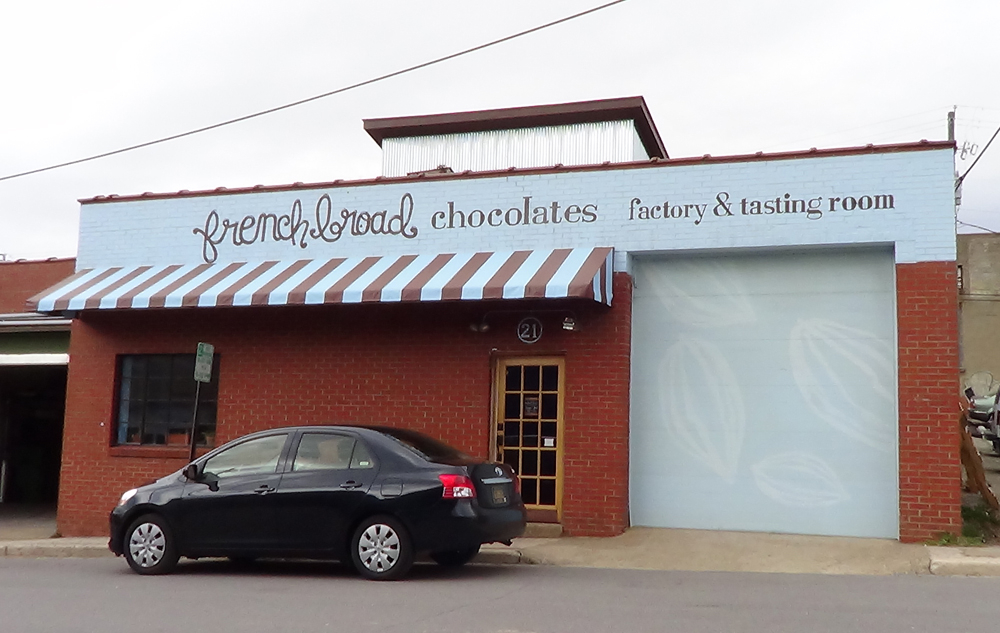 The Rattigans next began construction of a Chocolate Factory for their handmade, small-batch chocolates in downtown Asheville, after leasing a 4000 square foot warehouse and securing a small business loan. As if that weren’t enough, the factory has a “rooftop solar production deck.” Daniel built the first-ever solar cacao bean roaster, with mirrors and parabolic curves that focus the sun’s energy onto the roasting drum, and a solar-charged battery that rotates it. He’s currently at work on a roaster tough enough to handle full-time production.
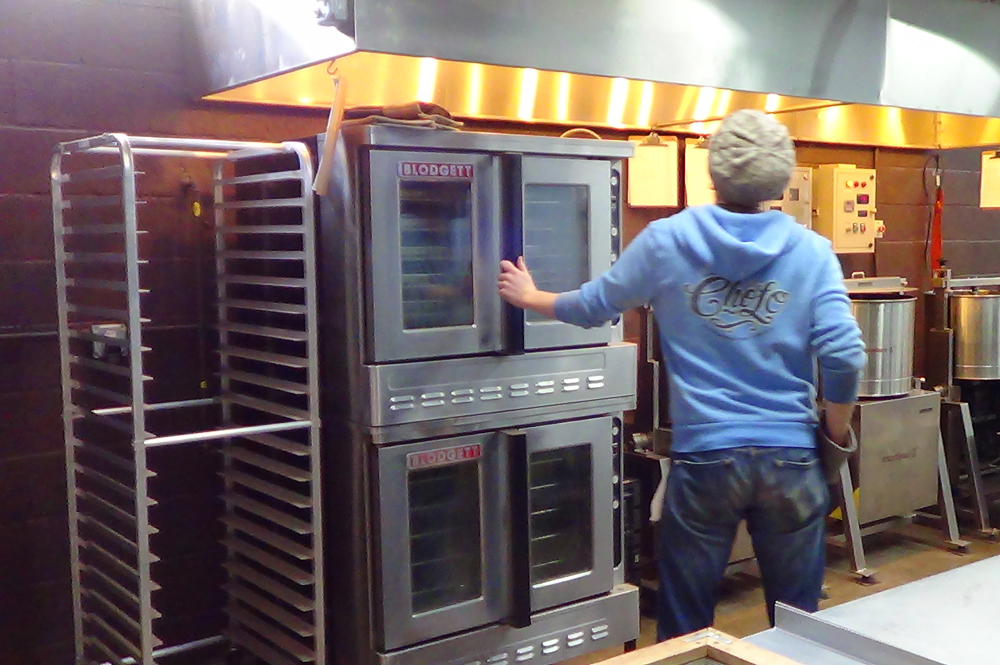 At the Chocolate Factory, everything is done by hand. Cacao beans fresh out of the sack from South America are sorted for quality, then spread on trays and roasted. Roasting is one of the chocolatier’s main chances to affect the resulting flavor, and the roasting process is a secret. Roasted beans are sent through a homemade cracking mill and vibrator that separates pieces by size. (Dan built the machine rather than spend the thousands of dollars on a manufatured one.) Once the pieces are small enough, they are poured into another homemade device, a winnower that pumps away lightweight husk material. The resulting nibs are put into a kettle and set to rotating under heavy wheels, which heat and crush them…. Two days later, the cacao resembles chocolate.
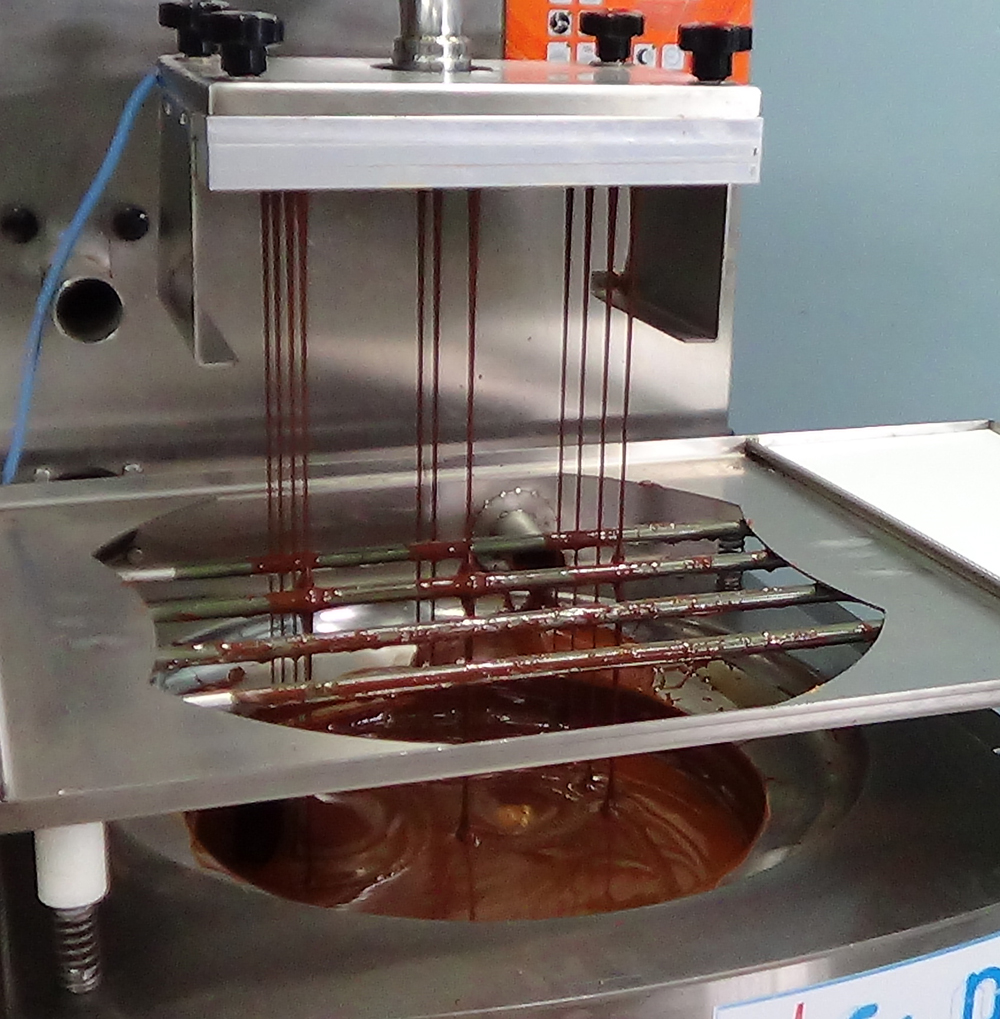 The molten chocolate is put into a tempering machine, one of the few store-bought devices in the factory. Tempering chocolate involves a controlled crystallization that creates a good, solid structure. If the chocolate cooled on its own, it would be crumbly and melt too easily. The machine regulates the chocolate’s temperature and keeps it constantly flowing. When the chocolatier is ready to make a bar, he shuts off the flow, inserts a mold, and dispenses a measured amount to fill it. He then places the mold on a vibrating surface to spread out the chocolate, and puts it into a cooler. Another benefit of a good crystal structure is that the resulting bar pulls away from the mold, enabling the chocolatier to knock it out. Bars are inspected, wrapped in foil, and decorated with a ribbon and label, all by hand.
 French Broad Chocolates is looking to increase the chocolate they import until all their products (truffles and drinks sold at their lounge, as well as bars) are “bean to bar” or even “farm to bar”: they have a friend in Costa Rica who opened a cacao fermentary and is purchasing cacao from farmers, and they’ve planted cacao on their own land in Costa Rica. In addition to using panela sugar from Cepicafe, their chocolates contain salt and tea from local distributors, and malt from Asheville’s Riverbend Malt House.
This year, we have six-packs of caramels and truffles from French Broad Chocolates.