By Emily Buehler, Weaver Street Market Marketing Office
 For decades, we’ve been lucky to have local farmers bringing us heads of lettuce in the springtime. Just as some of our long-time lettuce growers have retired, Red Hawk Farm arrived.
Brett Evans grows lettuces and other greens on several acres in Hurdle Mills and sells them in “baby lettuce” form. You can find them prewashed in clamshells in our produce department. This month, we drove out to visit him and tour the fields, and to learn just what it takes to grow all that lettuce, and in the hot Carolina summertime to boot.
On the Farm
 Set back from the road down a long driveway through trees, Red Hawk Farm is an impressive expanse of cleared land, surrounded by a deer fence. Seven or so high tunnels sit in the center, along with a barn for packing and washing, a shed covering a tractor and other machinery, and the small house where Brett lives with his wife. Perfectly flat fields spread out on one side of the tunnel houses, with land cleared for both more tunnels and more fields.
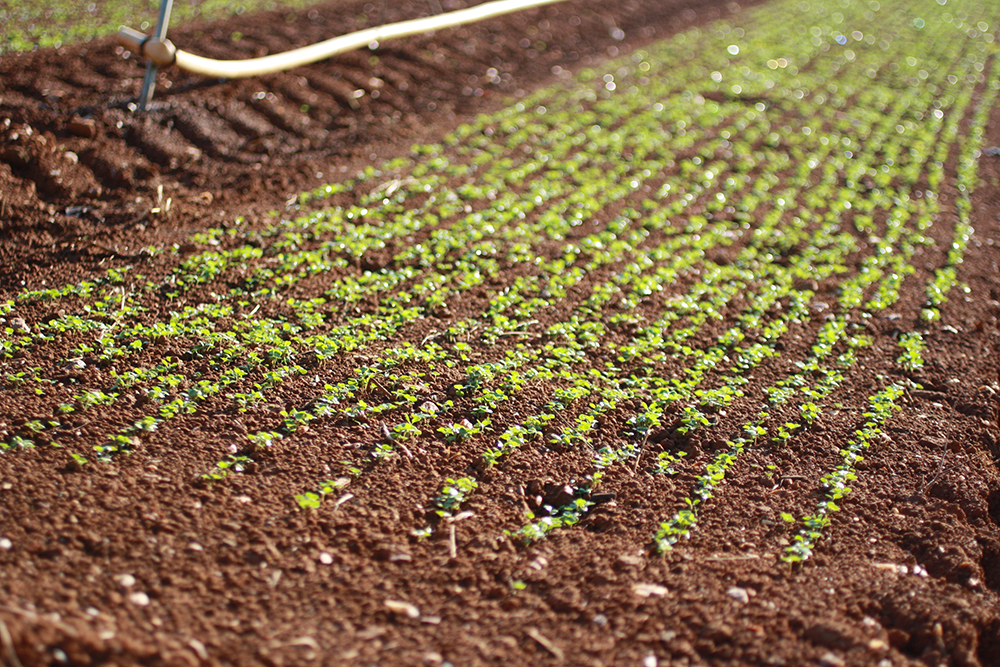 Brett showed us the labor-saving implements that plant seeds using the tractor. He’s had to calibrate all the parts of the growing process to work together: matching the width of the field rows to the spacing of the seeds, followed by the spacing of the irrigation system and the harvester. He tries to use efficiencies like these to keep the price of the products down, and to reduce the amount of arduous labor required.

In one of the tunnels, filled with seedlings that need to be transplanted, he demonstrated “paper pots”, grids of biodegradable paper (filled with plants) that, when pulled a certain way, stretch out into one long row of evenly spaced plants that can be lowered into a furrow in one motion. The only problem, Brett told us, is that the National Organic Standards Board recently decided the paper pots cannot be used on organic farms and set an implementation date of only a few months, leaving farmers scrambling and not allowing the company an opportunity to certify its product.
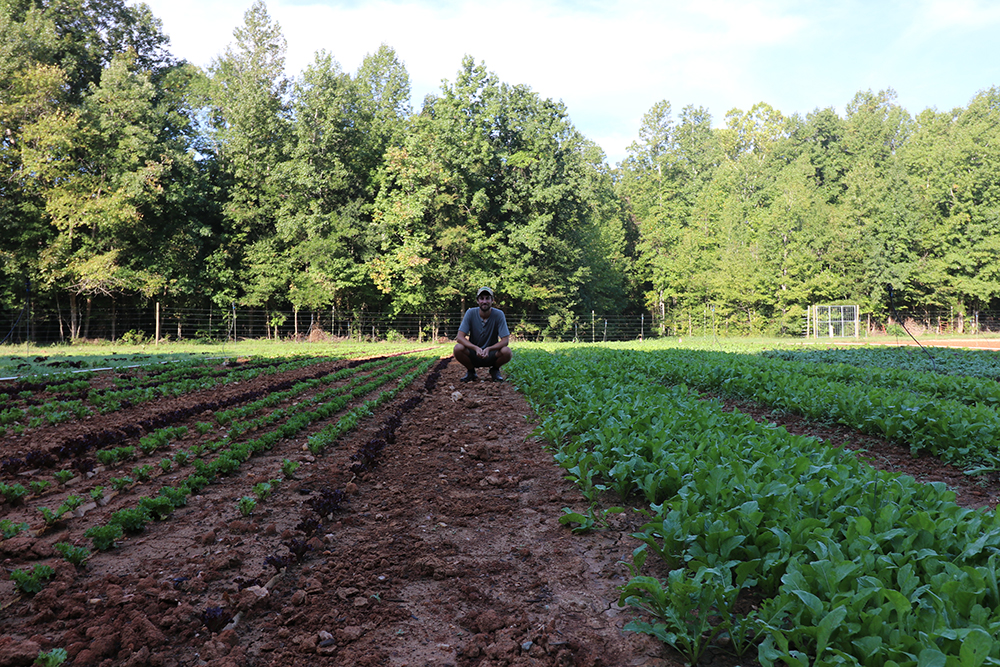 The farm staff plant lettuce seeds every week. He showed us rows that were one, two, and three weeks old. He also pointed out the perfect plants in a younger row, compared to plants that had been doused with a heavy rain, with about a third of the crop lost. He tries to manage the supply of lettuce going to Weaver Street Market and other vendors, but an unpredictable rainstorm can throw the planning off. He described the flea beetles that appeared this year, after not having any last year, and the recent arrival of caterpillars. Covering the plants helps with insect pests but can cause more destruction in a rainstorm. Another option is to plant under a tunnel, and Brett has to decide if the threat of rain damage is enough to use this valuable space for a round of lettuce.
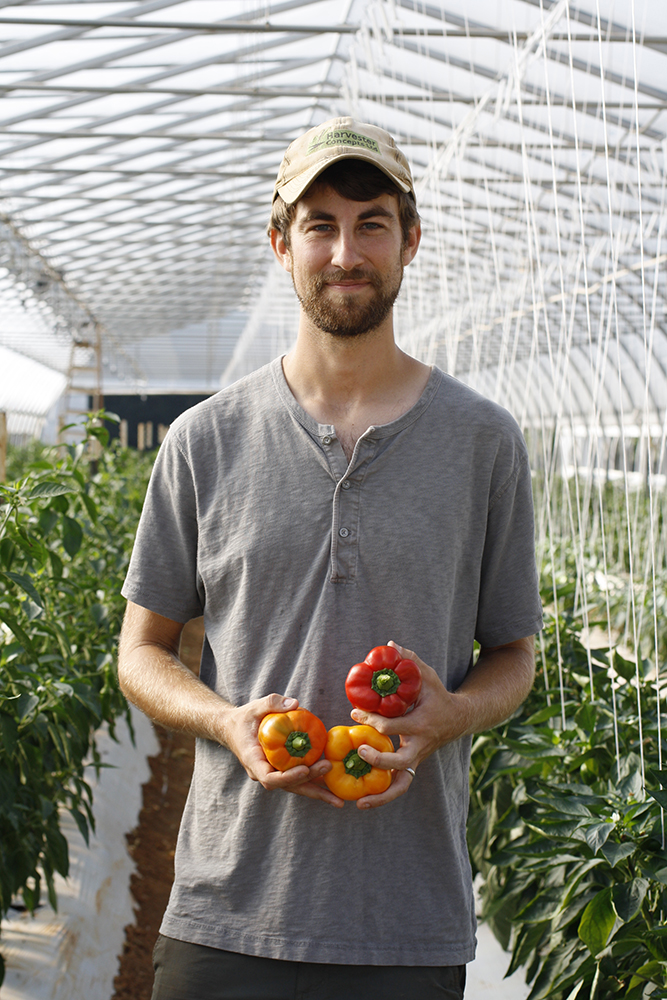 We walked through one tunnel filled with pepper plants. Brett recognizes the importance of diversifying, and not relying on one crop for his whole income. If lettuce continues to be difficult to grow all summer, he might switch to more heat- and rain-friendly summer crops. There is a difficult choice between growing the produce no one else has and growing the items that do best in a certain season.
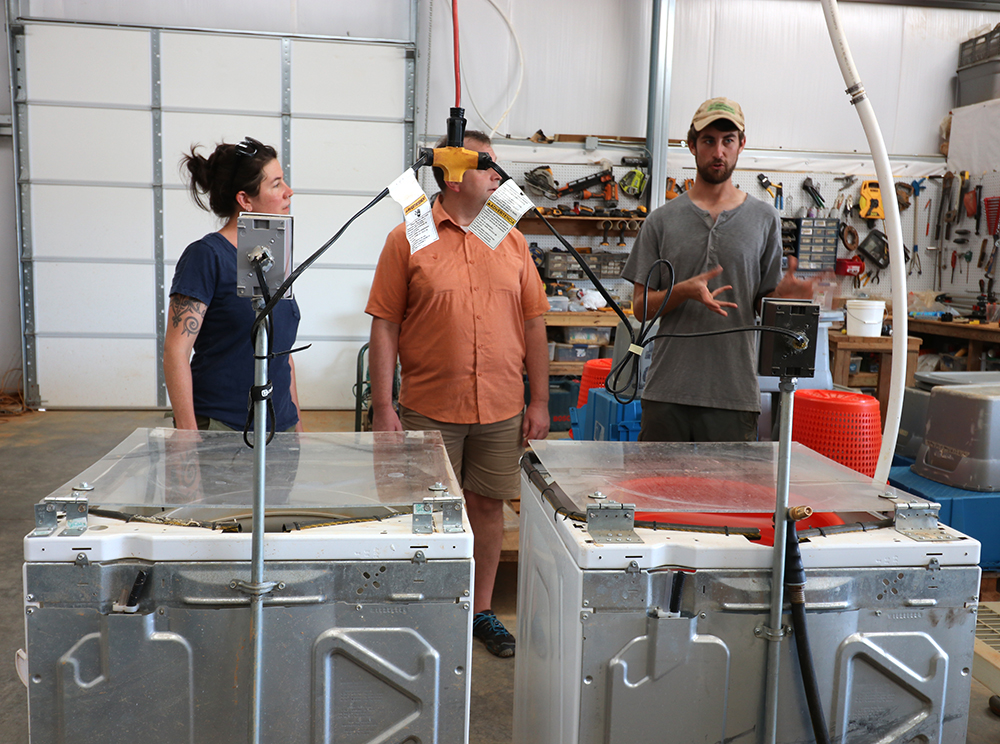
To keep weeds back, Brett uses a tilling method to disrupt the weed seeds. The special tiller swirls the soil horizontally without digging too deep, which benefits the health of the soil. In the packing barn, we saw a harvester that is pushed down the rows, with blades on the bottom to cut the greens. We also saw hand-held versions that were used before the farm acquired the rolling model. Brett purchased two new washing machines and modified them as giant salad spinners.
An impressive amount of dedication, planning, and labor go into producing the packages of baby lettuces that end up in our stores. We’re glad to have Red Hawk Farm supplying us with these delicious greens! Check them out online, here: http://redhawkfarmnc.com/