 By Rob Nichols, former Weaver Street Market Bread Bakery Manager
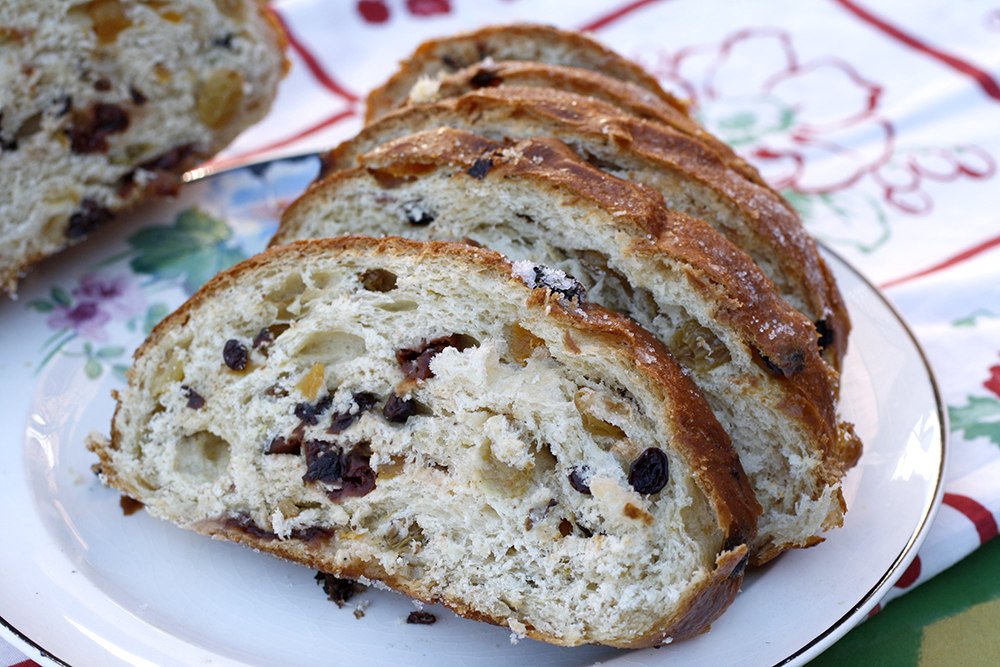
The first thing to know is that It’s Not Fruitcake. Stollen is a yeast bread that is fortified with spices and citrus, some butter, and alcohol-soaked fruit; in the German Christmas tradition, the stollen is cloaked in a layer of white sugar to represent the baby Jesus wrapped in swaddling, perhaps in the manger.
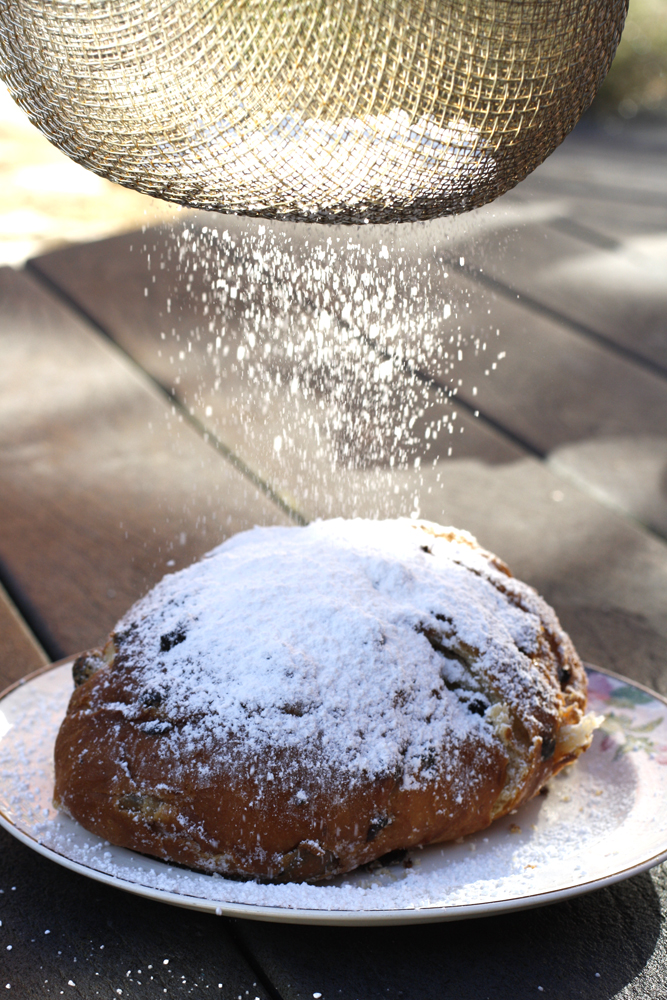 Weaver Street has been making stollen for over 20 years, and we have our own style. In some ways, it is a pared down version of a sometimes over-the-top bread. That is, the dough is enriched with butter, but not so much that it tastes heavy; it is sweet but not cloying. We don’t add nuts or nut paste, and our fruit is the same high quality (non-preserved) fruit that we sell in the stores: golden raisins, sweet cherries, apricots, and currants. The fruit is marinated in sherry for about 30 hours before it is added, then the dough ferments overnight before being shaped and baked the following day. While still warm from the oven, the stollen is dipped in butter and rolled in sugar, which seals the bread to retain moisture. Once cool, the loaf can be finished with a dusting of powdered sugar; we hope you’ll try this at home.
A stollen is best if stored at room temperature and protected from air. Once cut, a good storage method is to wrap loosely in foil, then store in a plastic bag. Later, if needed, it is easily dressed up with a fresh coat of powdered sugar.
Stollen is great as part of a special holiday brunch or breakfast, or equally as an afternoon snack with tea or coffee. And of course, it is a preferred snack for many Santas with some hot chocolate during a busy night. The only problem might be finding a time when you don’t want to have a little bite.
Some Historical Information
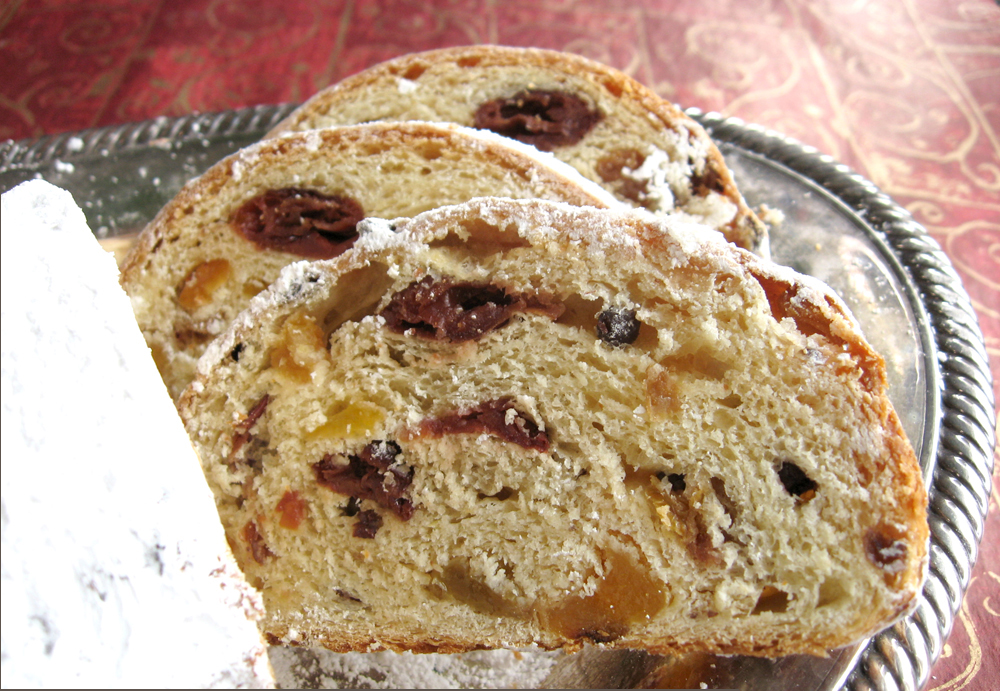 The tradition of Christmas stollen dates back to 14th century Germany. The sweeteners in this period were honey and dried fruits; until the 17th century, sugar was a scarce and expensive commodity. For this reason, sweets were only meant for times of great festivity and joy. The fruit bread “stollen” was popular in Germany and was made only at Christmas, the time of greatest rejoicing.
Originally the confection was made without milk or butter because these items were forbidden by the Church during the Advent. That changed in 1490 when Pope Innocent VIII signed the “Butter Document,” allowing bakers to use butter. It was much later when the use of milk was finally permitted.